

Tapio Analyzers · sensors
Sensors for Tapio Analyzers
The sensors of a Tapio Analyzer read the same strip, and the software aligns their readings to the same positions on the sheet, so the channels can be compared point by point. Choose the combination your grades and quality problems need.
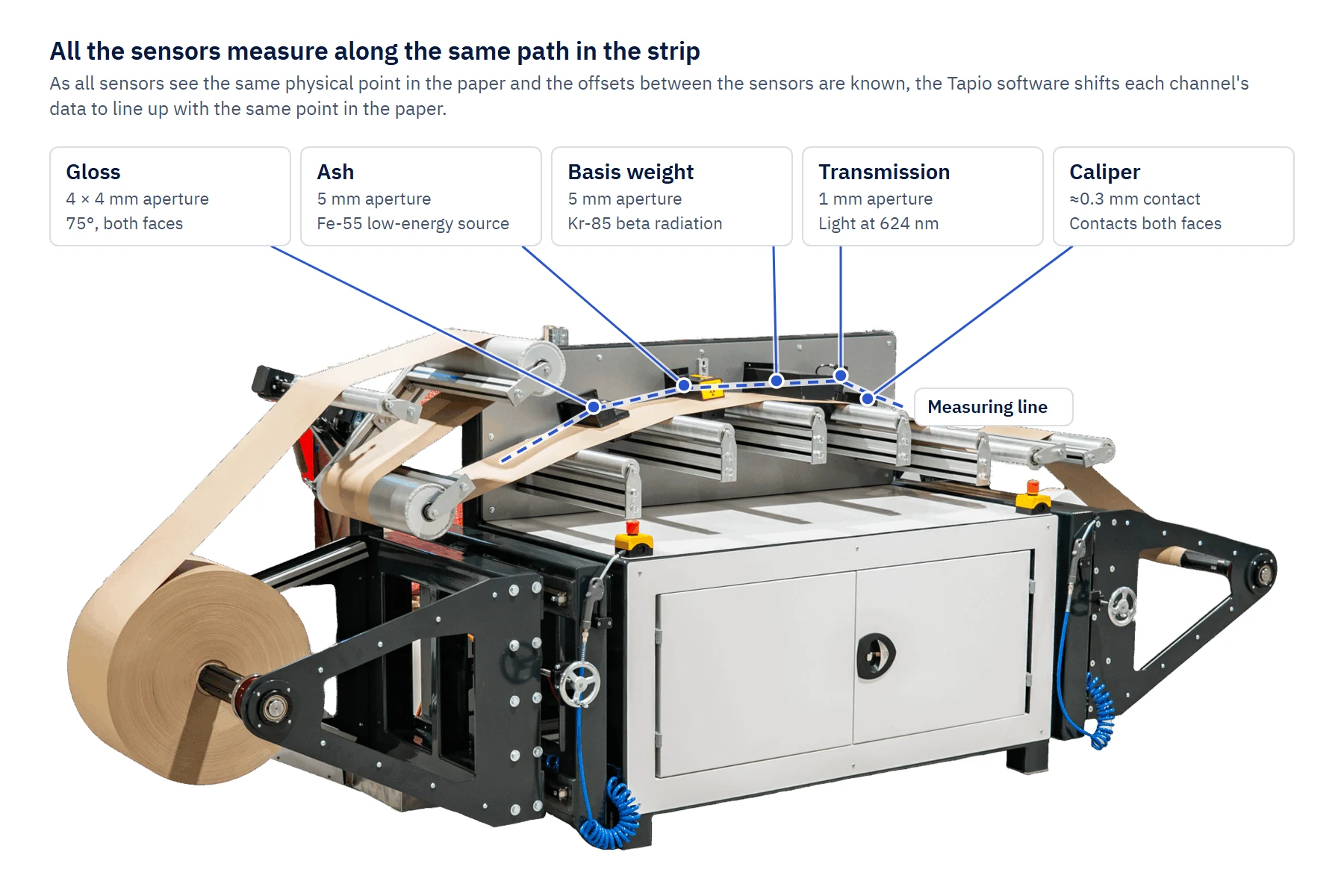
Configurations commonly include basis weight, caliper, transmission, ash and gloss on both faces; remission, porosity and custom sensors are options. The sensors sit on one line at known distances from each other, and the software aligns every channel to the same positions on the paper, so density, bulk and relative ash can be derived point by point and any two properties correlated. The aperture matters when you read the results: a sensor cannot see structure much smaller than its spot, so caliper at 0.3 mm resolves detail that basis weight at 5 mm averages away.
The sensors
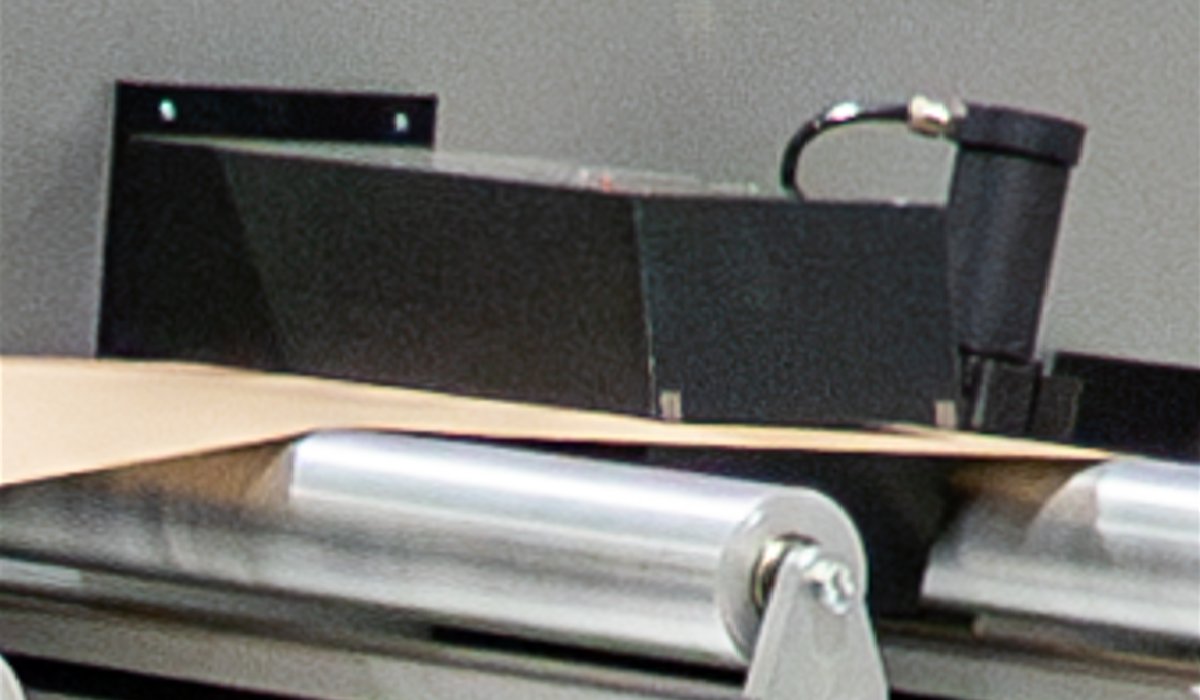
Basis weight
- Beta radiation from a Kr-85 source, semiconductor detector
- 5 mm circular aperture
- All grades up to 1000 g/m²
- Used for: wet end, stock approach and coating problems; checking online basis weight measurements
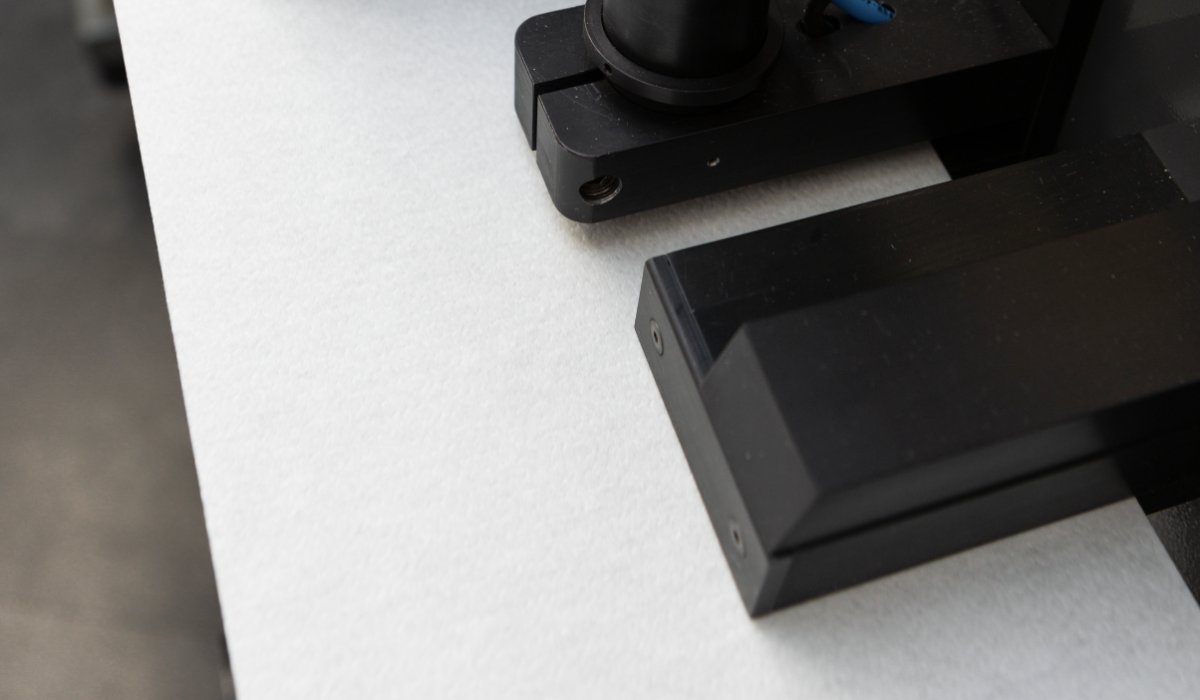
Caliper
- Contacting measurement from the top and bottom of the sheet, contact area about 0.3 mm in diameter (depending on pressure)
- Range up to 800 μm, can be extended
- Used for: calender and press section problems, barring, printability, checking online caliper measurements
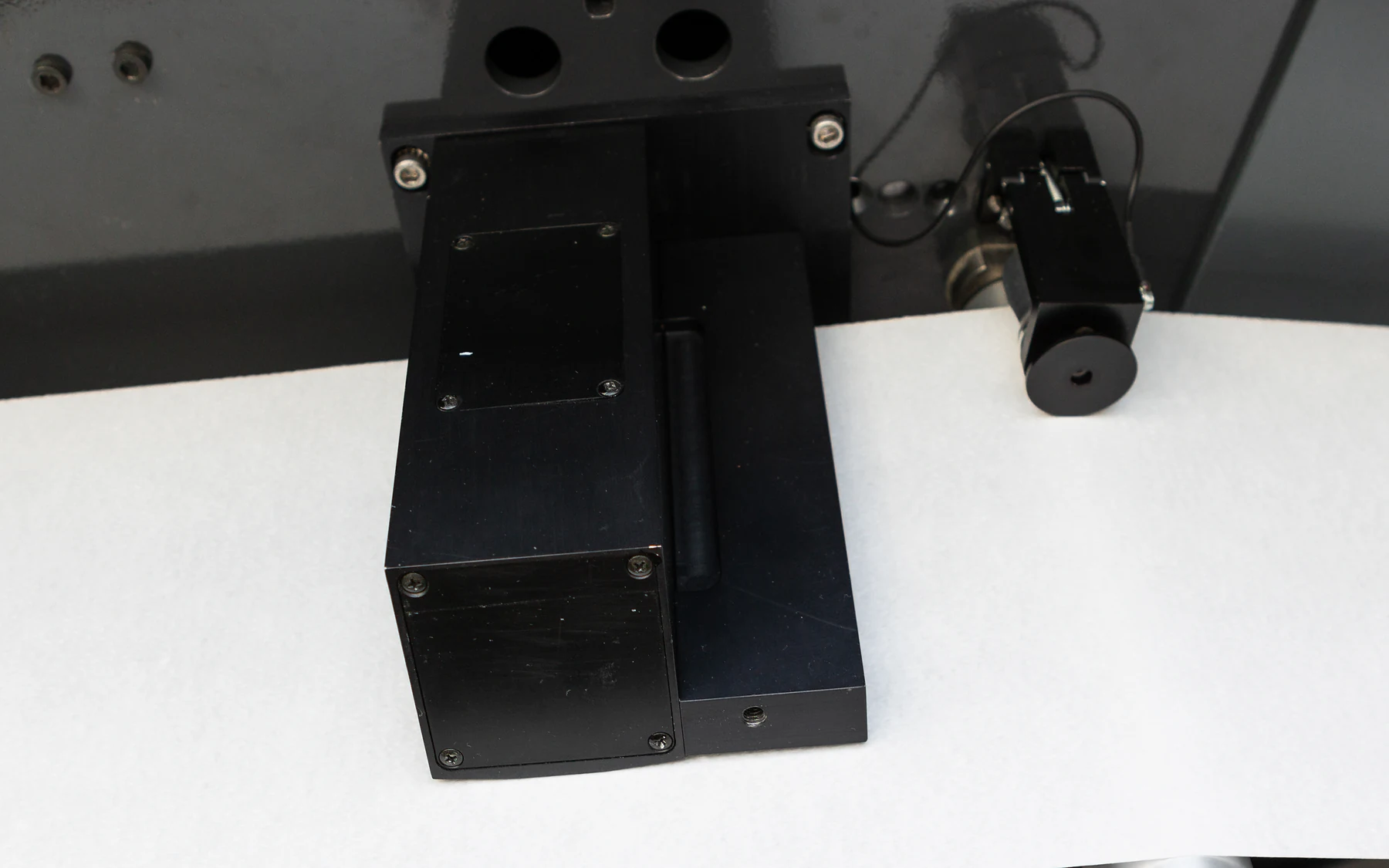
Gloss
- Both faces measured separately, optically at the standard 75° angle, with 624 nm light
- 4 × 4 mm square aperture
- Standard gloss and small-scale gloss variation, on all grades including base paper
- Used for: press section, rolls and felts; coating, backing roll and size press effects; gloss mottle before and after printing
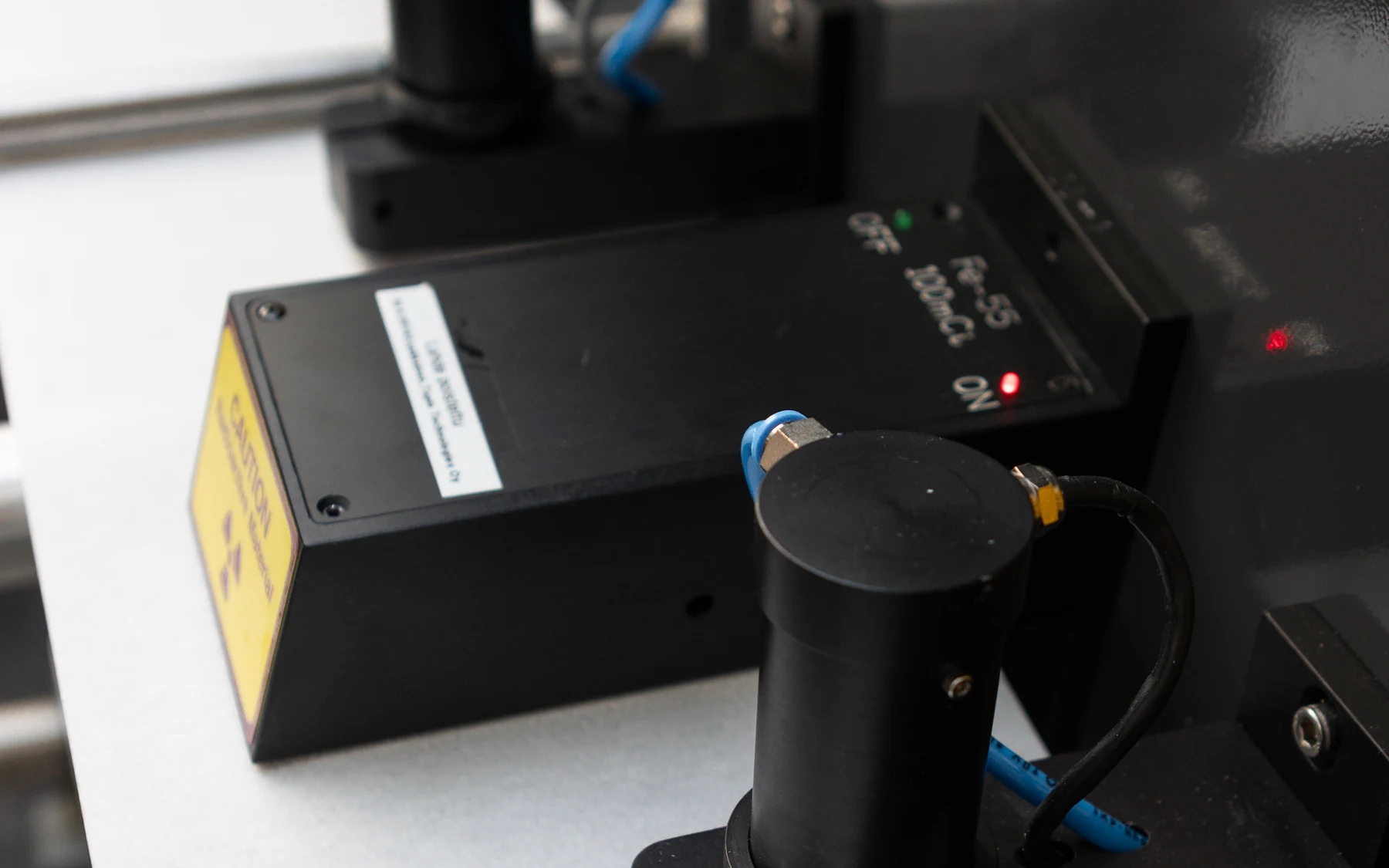
Ash
- An attenuation measurement with low-energy radiation from an Fe-55 source, sensitive to the mineral content of the sheet; quantitative ash needs calibration for the filler or coating
- 5 mm circular aperture
- Coated and filled grades
- Used for: retention problems, coat weight and its variation, coater tuning
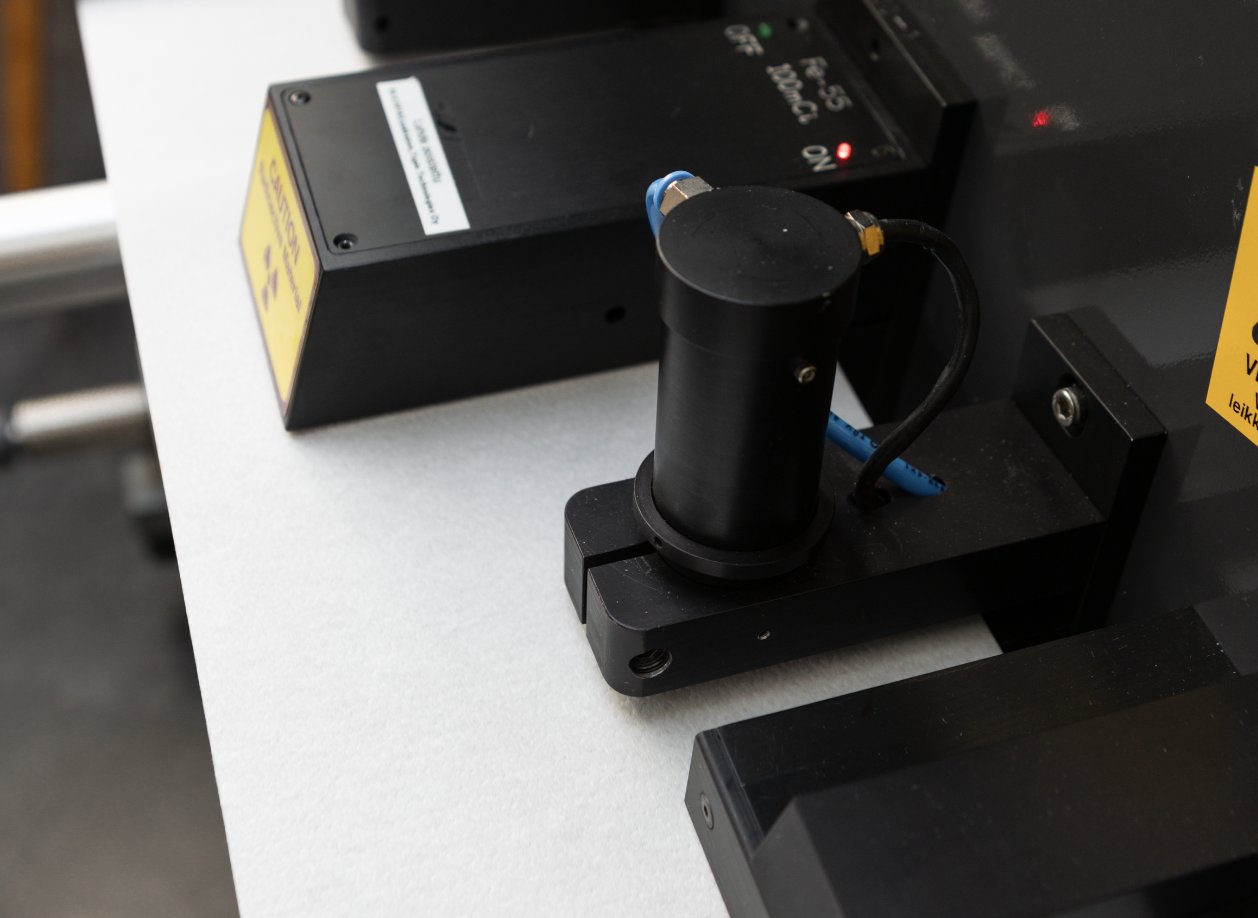
Transmission
- Transmitted light, red (624 nm) or infrared (875 nm)
- 1 mm circular aperture
- Optical formation and floc size: the formation index (σ over the square root of the mean) comes from 400 consecutive readings, like a laboratory test on a 20 × 20 grid at 3.5 mm pitch. It is transmission-based, not a mass-based formation measurement
- In many grades it follows basis weight closely at a fine scale
- Used for: separating wet end, press and calender effects; press section, moisture and temperature variation
Related article: Predicting basis weight from transmission and caliper
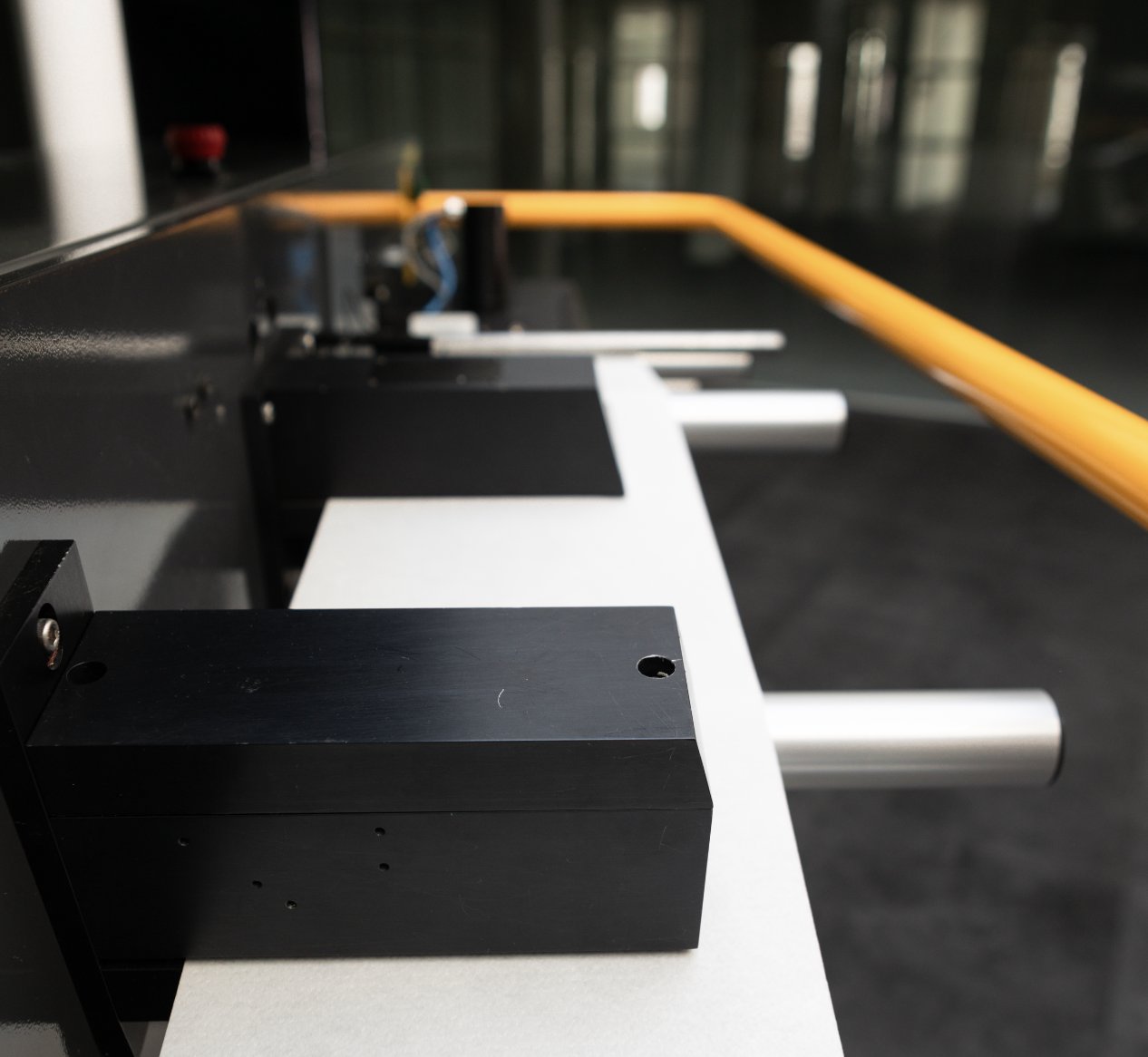
Remission (brightness)
- Brightness variation of the paper, 0.3 mm circular aperture
- All grades; follows coating variation closely
- Used for: calender blackening, see-through variation in white top board
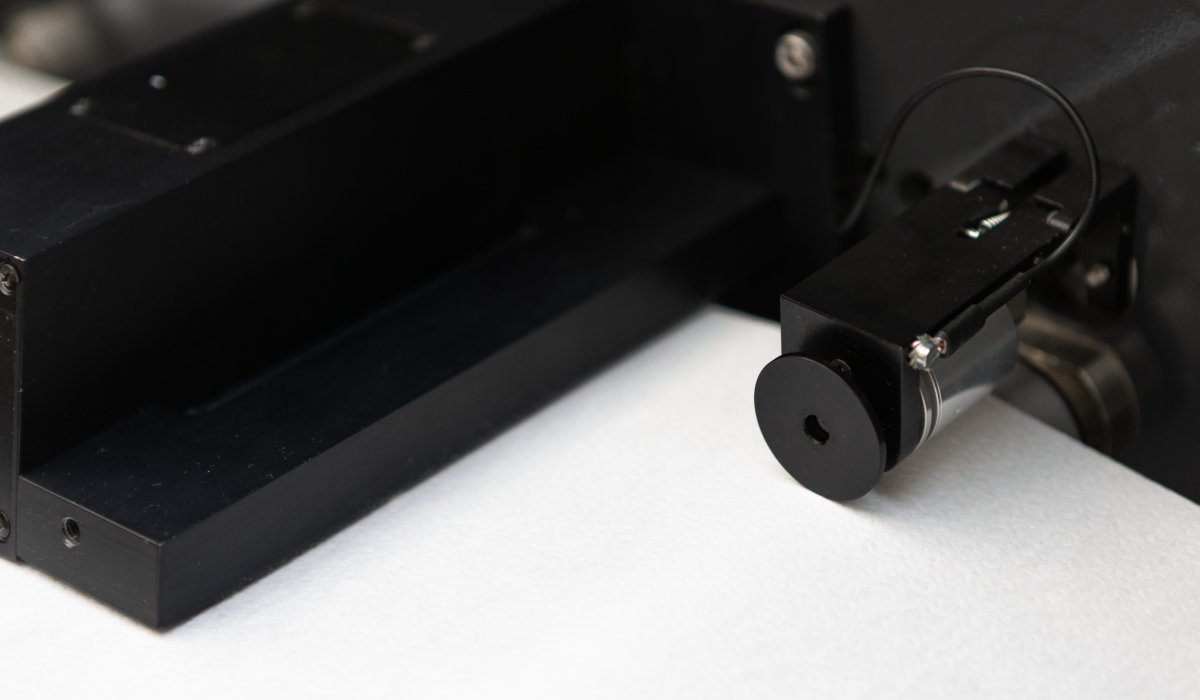
Porosity
- Air flow through the sheet under constant, controlled pressure
- Measurement area 10 cm² (36 mm circle)
- Follows laboratory methods such as Bendtsen, Gurley and Bekk
- Used for: air permeability profiles of the grades where it matters; availability depends on the analyzer configuration and the grade
Related article: Continuous porosity profile measurement
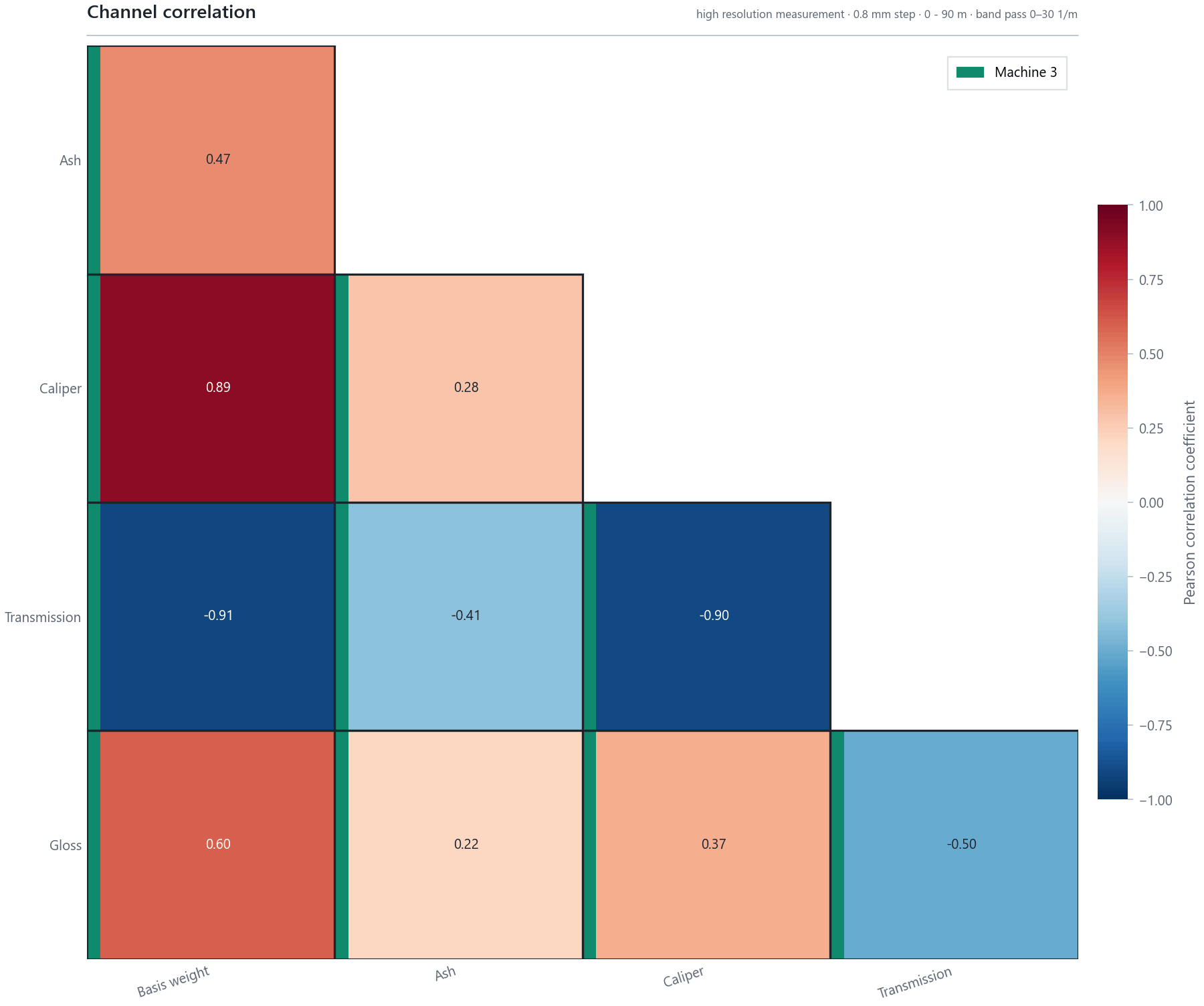
Custom sensors and calculated channels
An analyzer can support up to 16 sensors, and the measurement interface accepts both voltage and current signals, so custom sensors can be added. Because the channels are aligned to the same positions, density, bulk, relative ash and optical formation can be calculated from the measured channels as derived measurements, and any two channels can be correlated, as in the matrix above.
Which sensors does your case need?
Tell us about your grades and the variation you are chasing, and we will suggest a configuration. Or start with the Tapio Analysis service in our laboratory.