Using Hardness Variation (CV%) to Identify Defective Rolls
Using Hardness Variation (CV%) to Identify Defective Rolls “Papermaking would be easy, if only there were no edges!” Problem: Converter
Every mill knows the frustration of a “bad” roll — unscheduled downtime, customer complaints, wasted materials, and production delays. But what if you could detect roll defects before they cause expensive problems? The good news: you can. And it starts with understanding roll hardness profiles.
Roll hardness is a practical indicator of how the roll has been built, reflecting tension, density, and internal stress. These structural variations typically form during winding due to tension variation, air entrainment, or internal stresses, thickness, friction, density or moisture differences. Resulting defects may not be visible in standard quality control but can directly affect converting performance in paper, board, plastic films, and foils.
Traditional inspection methods can miss internal defects that compromise roll integrity. A roll may look perfect on the outside, yet contain defects in the tension or thickness that can lead to eg. web breaks, winding issues, and/or inefficient processing.These problems can go undetected until they become costly failures.
When defective rolls like this pass through, the costs accumulate quietly:
Because your data stops at the sheet, the root cause inside the roll stays buried.
Most production lines have various quality measurement tools, but not at the roll level.
On-line scanners provide continuous profile data from the sheet:
Single-point hardness tools (manual hammers, etc.) are also used for quick spot measurements typically taken at a few positions.
Single-point instruments can give an indication of roll hardness, but they don’t capture variation across the full width or produce a true profile. They also don’t provide statistical insight into the roll structure.
In practice, this means the structure of the roll remains largely unmeasured.
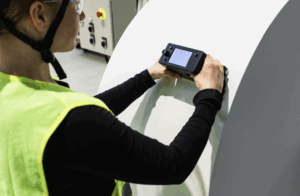
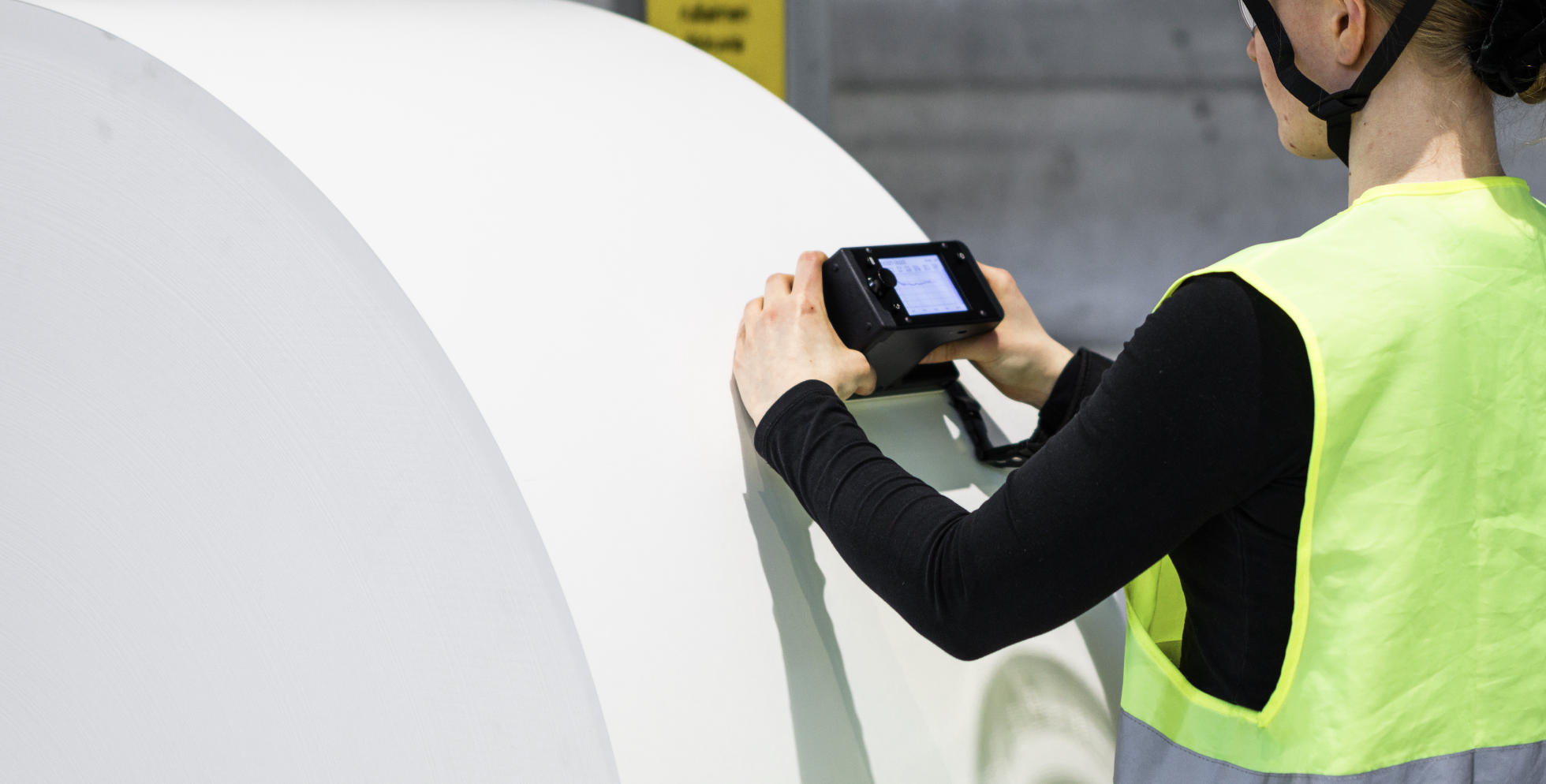
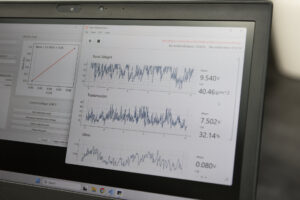
A roll hardness profiler like the Tapio RQP Live measures the entire cross-direction structure of the roll and produces a true hardness profile with statistical information.
Instead of a few points, you get:
This is the difference between checking a few points and actually understanding the quality of the roll.
If you’re seeing recurring instability or unexplained waste in converting, and surface measurements aren’t pointing to a cause, the problem is likely structural.
A hardness profile will tell you whether it is.

Using Hardness Variation (CV%) to Identify Defective Rolls “Papermaking would be easy, if only there were no edges!” Problem: Converter

Continous Profile Porosity Sensors Porosity: an important quality parameter Porosity and air/gas permeability are important quality parameters for many paper,

Reducing plastic film roll rejections with roll hardness profiling A plastic film producer was experiencing quality issues: around 25% of