Category: Paper & Board Process Diagnostics

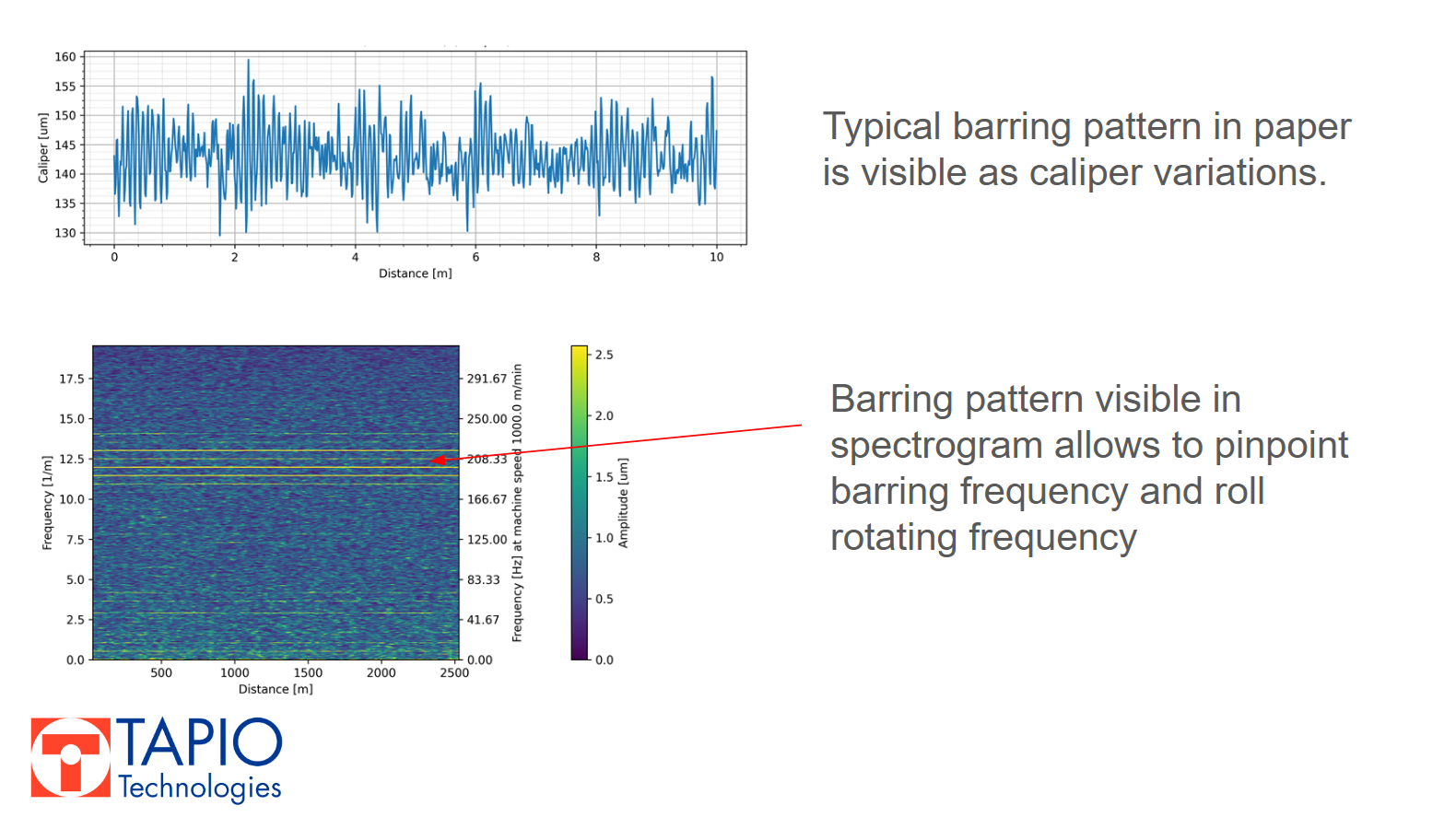
Machine-direction caliper measurement showing periodic thickness variations and a spectrogram highlighting a stable barring frequency over distance.

How Tapio Analysis Helps Solve Barring Problems

How Tapio Analysis Helps Solve Barring Problems In paper and board production, calender roll barring is a significant problem which can lead to unscheduled maintenance breaks and visible defects in the end product. Although the exact root cause of barring is not always immediately clear, it can originate from small

Read More »
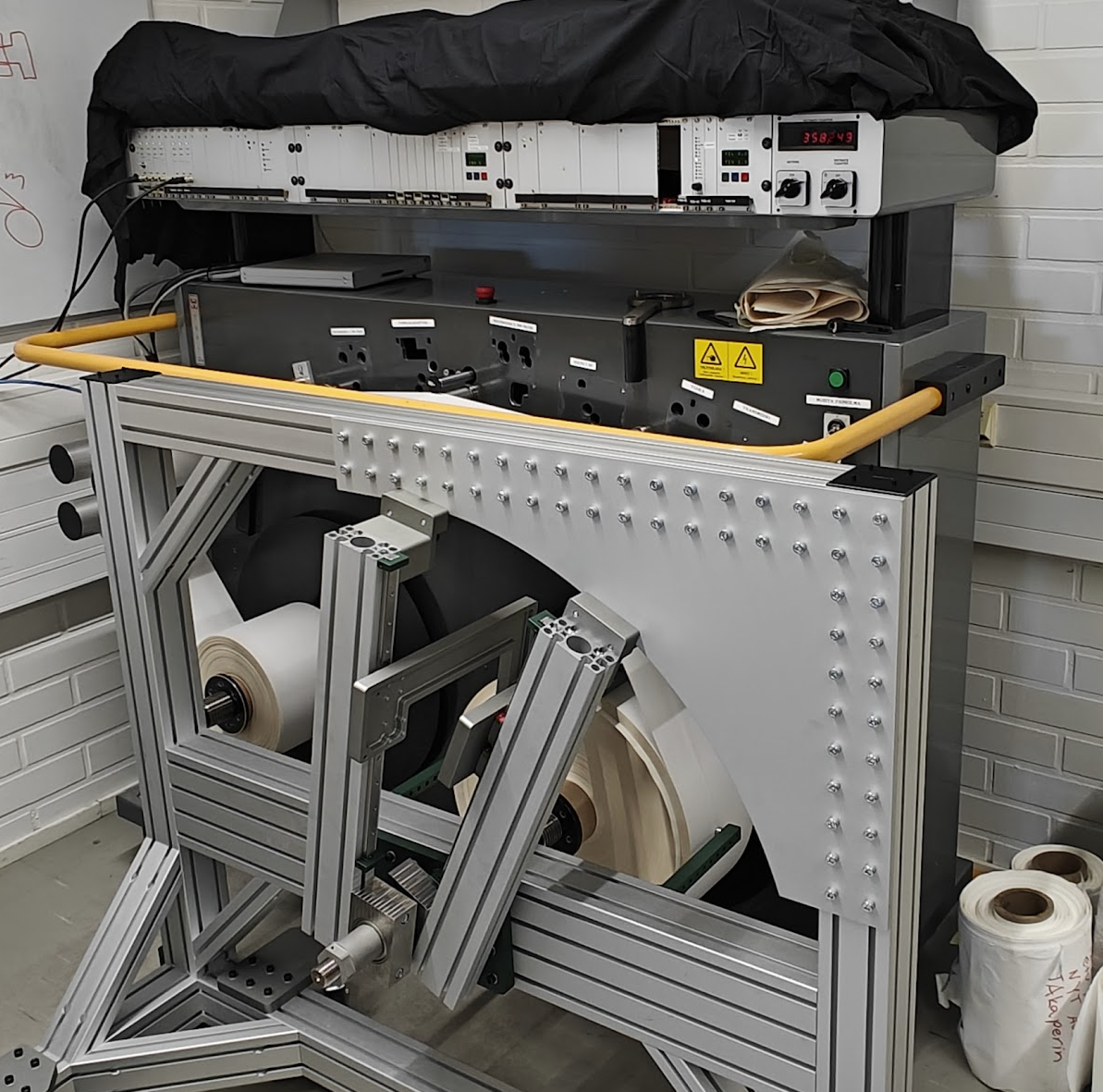
Laboratory setup of a Tapio Analyzer at Aalto University, showing the winding frame, caliper measurement system and multi-probe roundness measurement equipment.

How Product Variations Can Cause Winder Vibration

How Product Variations can Cause Winder Vibration A winder–cutter is not an easy system to optimize. Changing web tensions, roll diameters, masses and rotational frequencies all interact, and the behaviour of the machine changes continuously during the winding cycle. This makes it challenging to avoid resonances and unwanted vibration. During

Read More »
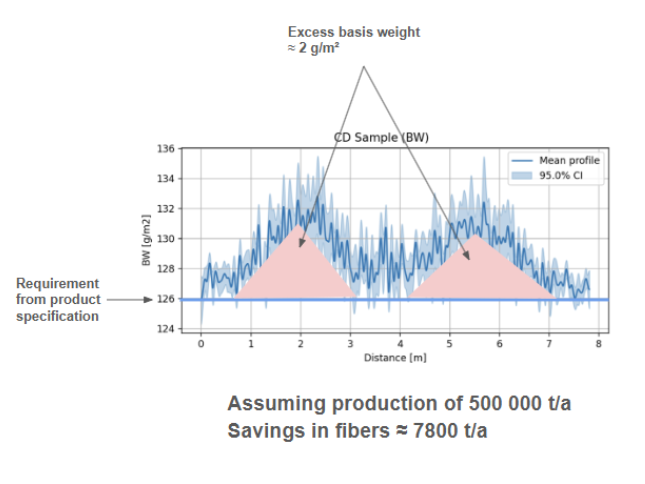
Graph showing excess basis weight in cross-direction (CD) paper profile leading to fiber overuse and potential savings of approximately 7800 t/a.

Optimizing paper and board machine CD profiles with Tapio Analysis

Optimizing paper and board machine CD profiles with Tapio Analysis In modern paper production, achieving an efficient and accurate cross-direction (CD) profile is critical for product quality and production cost control. In typical production lines, online scanners provide the operators with the CD profile. However, online QCS (Quality Control System)

Read More »
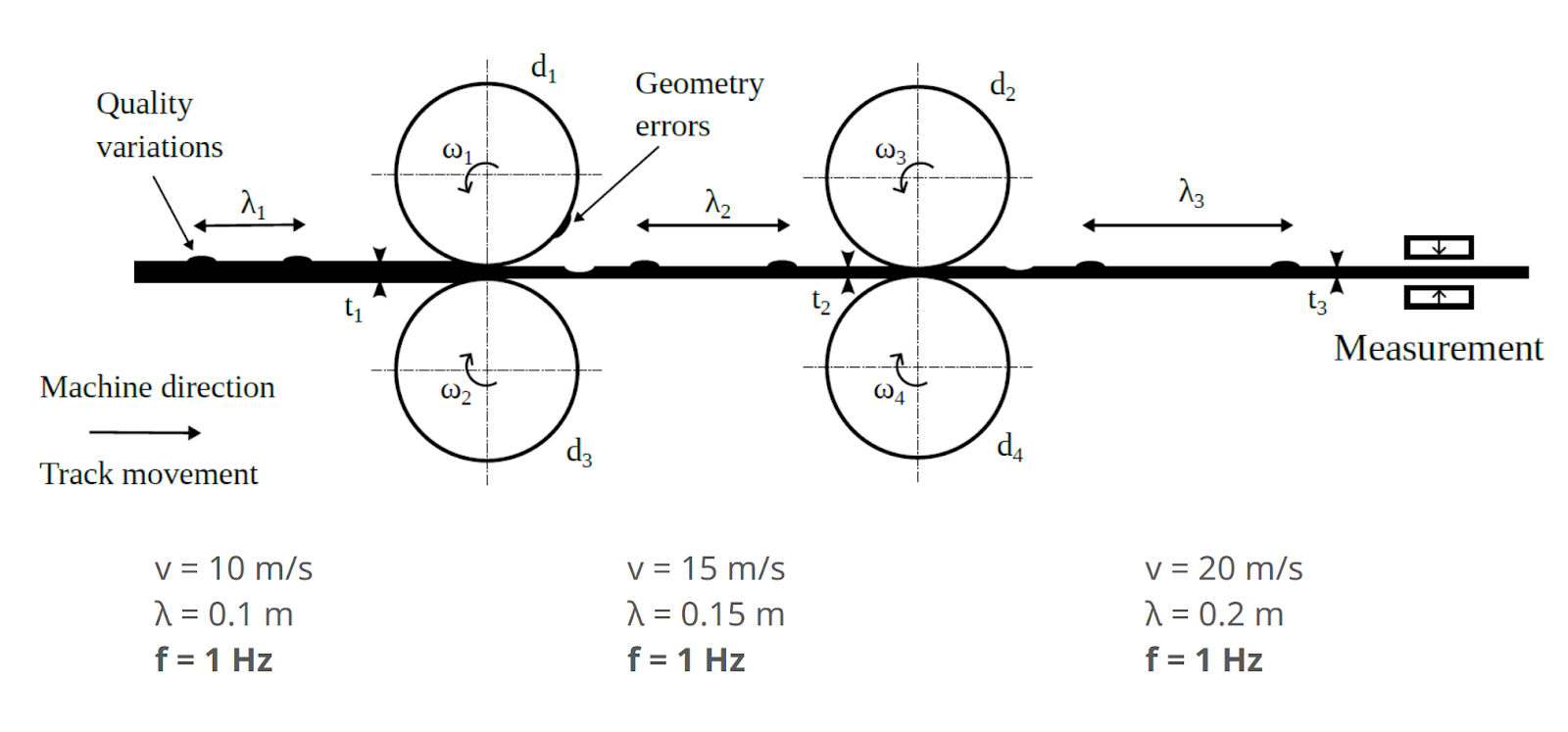
Diagram showing a web passing through rolls with quality variations and geometry errors, illustrating how machine direction frequency stays at 1 Hz even as velocity and wavelength change.

Locate problematic machine elements using Tapio MD Analysis

Locate problematic machine elements using Tapio MD Analysis During a shutdown, several components are replaced. But how do you know which one actually caused the problem? In many cases, recurring machine-direction variation continues after maintenance, because the root cause was not correctly identified. In paper, board, and other continuous production

Read More »