
Independent high resolution CD and MD diagnostics for paper and board producers. We identify the root causes behind profile variations and instability and deliver clear, actionable results within 48 hours of receiving your samples. Less downtime. Fewer complaints. Faster decisions.
Tapio Analysis is trusted by all major paper and board makers worldwide.
Results in 48 hours from receiving the samples. Every day without answers is a day of waste and uncertainty.
Independent service, we’re not tied to any machine suppliers or other vendor.
Expert report and online review with Tapio’s team of specialists.
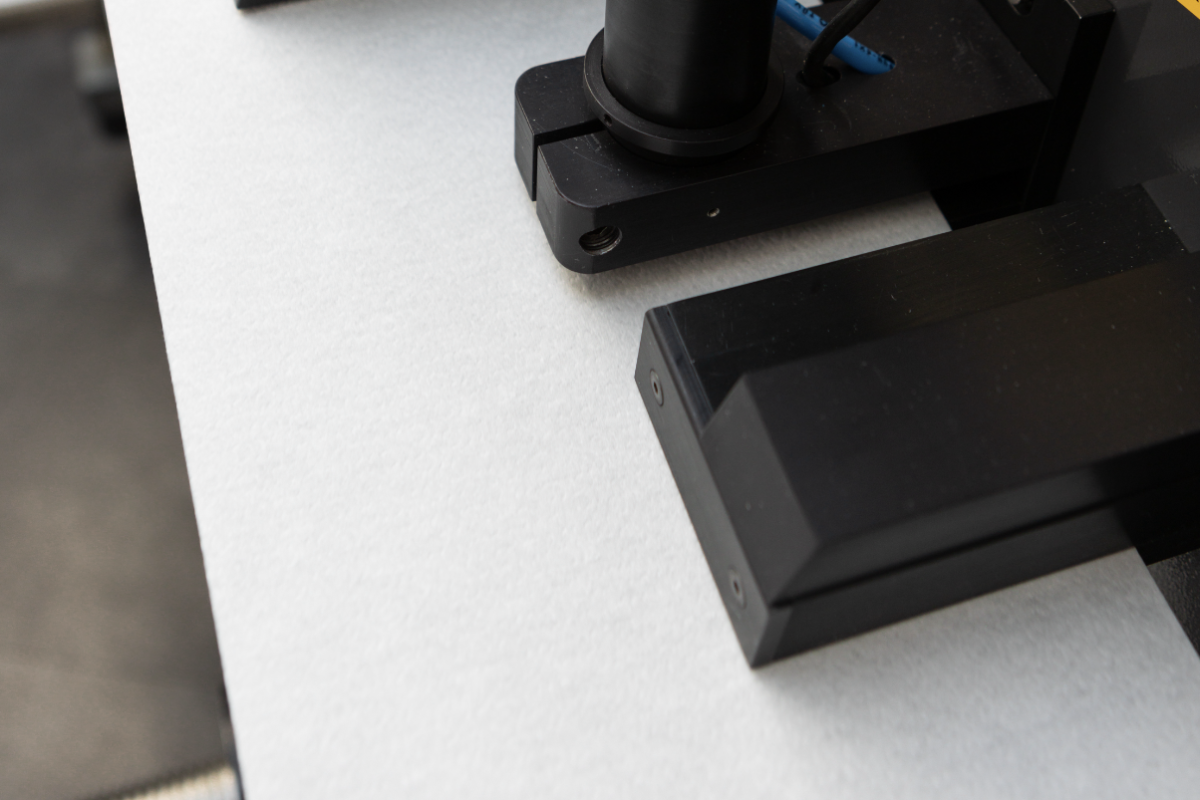
Tapio Analysis is a measurement and analysis service for customer-provided MD rolls or sets of CD strips. Suitable for all paper, board and nonwoven grades. We will conduct the measurements with the Tapio Analyzer within two working days of receiving the samples.
Tapio Analysis combines high-resolution laboratory measurements with spectral and correlation analysis to connect quality variations directly to machine elements, actuators or process conditions.
Tapio Analysis is the right too when you need to:
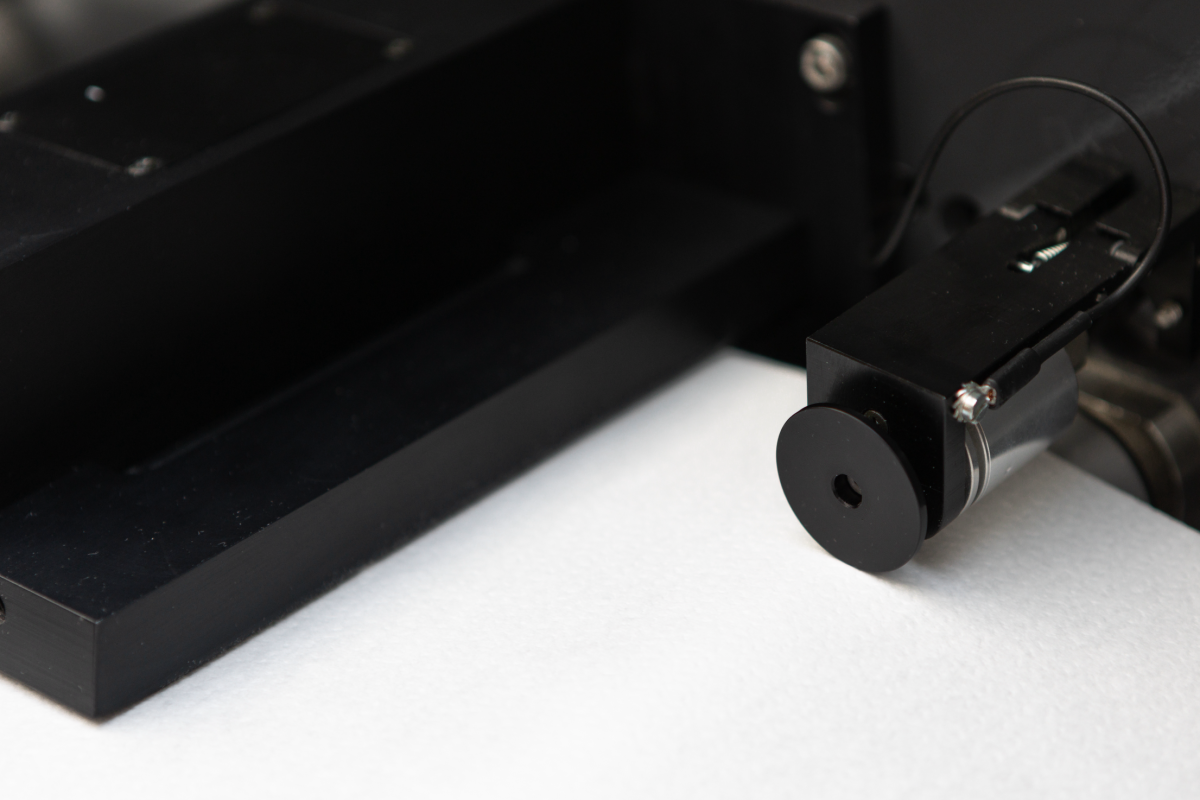
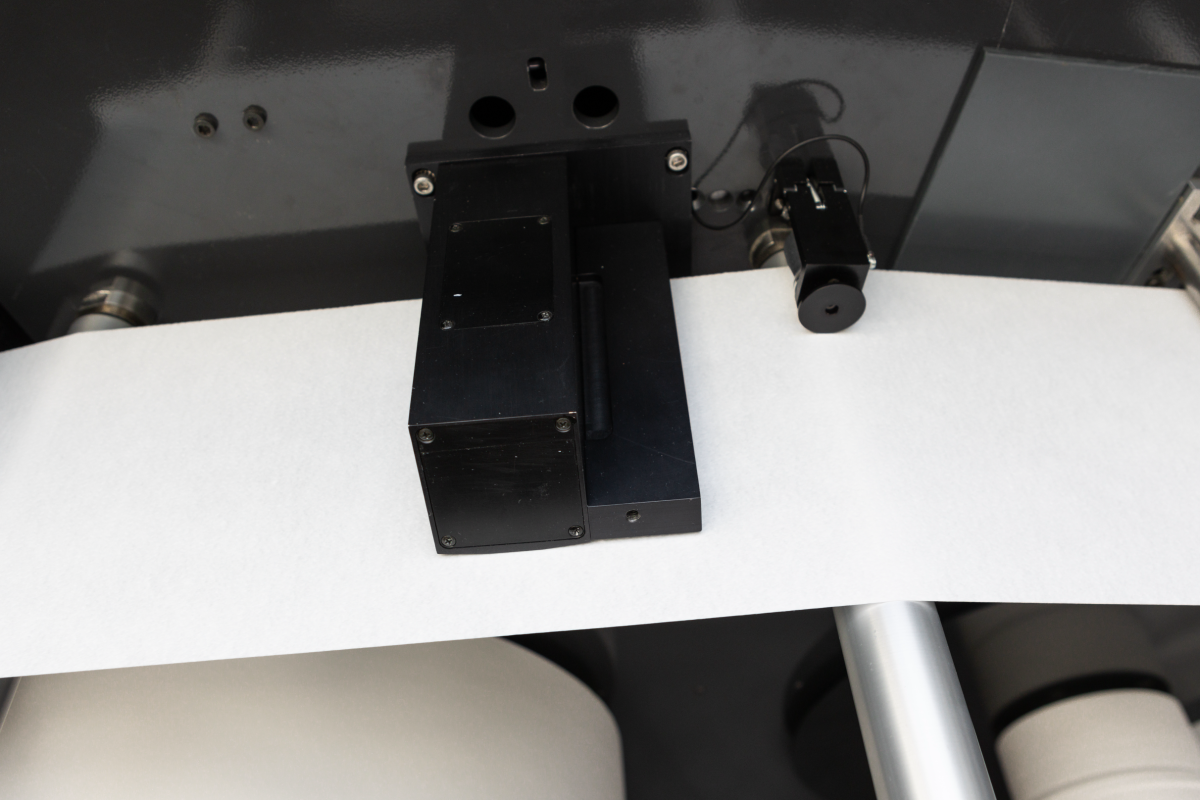
Measure and quantify how paper or board quality properties changed following a process modification or machine rebuild.
Obtain a high-resolution and full-width CD profile. Connect cross-directional profile variations to actuator spacings in the production line, including investigation of the very ends of the profile.
Locate the specific machine components causing measurable profile variations in your production. Unresolved profile variations lead to customer complaints and wasted production.
Determine whether winder vibrations align with periodic variations in the MD, which can be shown to originate from specific rolls, using spectral analysis against known roll diameters and rotating speeds.
Compare Tapio lab measurements against your online QCS data to verify scanner accuracy using easy built-in comparison tools.
Identify faulty calender rolls and determine whether roll barring originates from the wet end or coating stations.
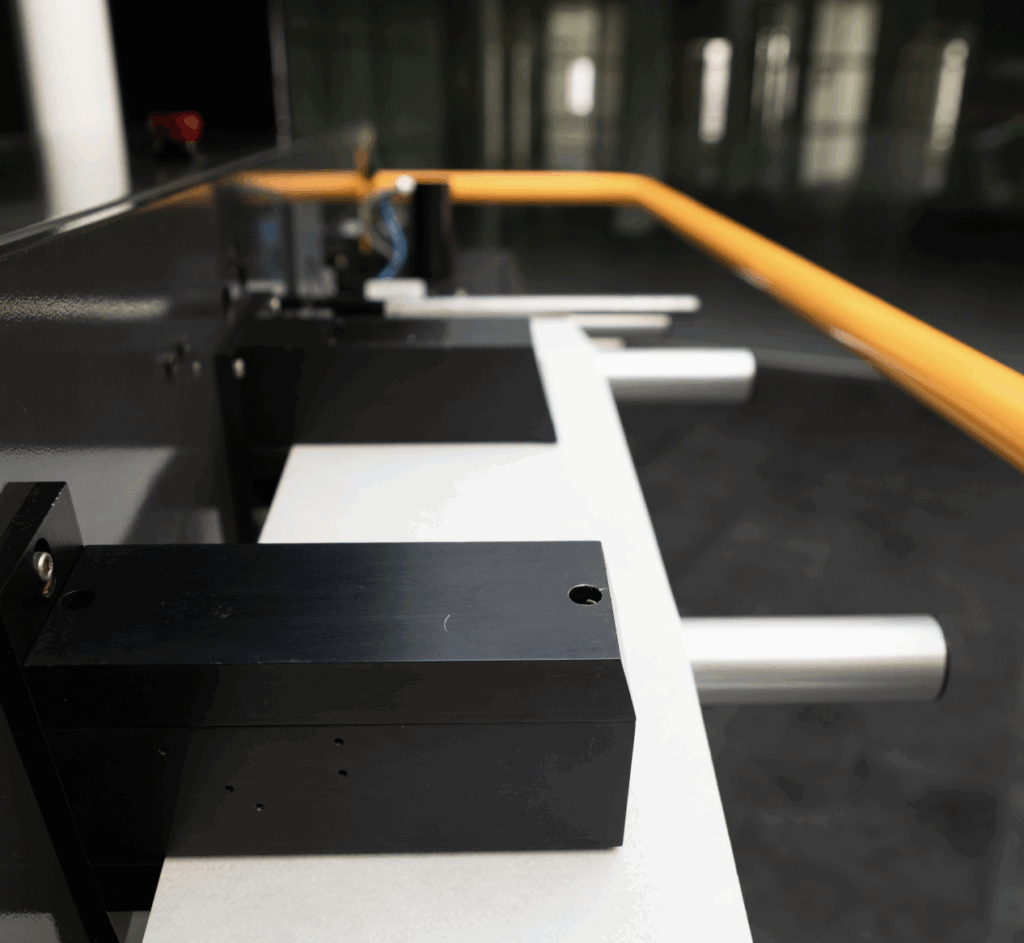
We measure the provided samples with a Tapio Analyzer to produce a high-resolution dataset. We can measure with all available Tapio sensors. The standard high-resolution dataset includes:
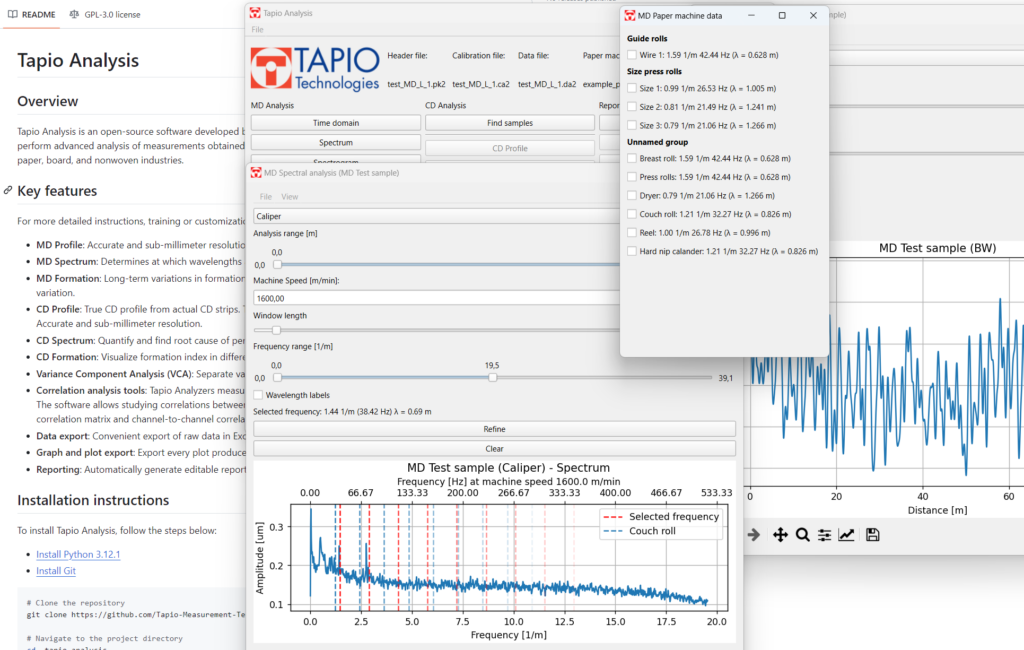
Every Tapio Analysis project includes:
The Tapio Analysis software used for data processing is open-source and available free of charge to all customers, enabling you to explore the data independently alongside our report.
Q: How is Tapio Analysis different from lab measurement instruments like PaperLab or Autoline?
A: The Tapio sensors are based on the same paper quality standards, but they measure paper and board profiles non-destructively with a small 1 mm sampling step and small measurement spots, allowing high-resolution studies of the profiles, including the spectral analysis and correlations between different quality parameters.
Q: How is Tapio Analysis different from online QCS scanners in paper machines?
A: Online QCS scanners are limited by the operating conditions and high production speeds, requiring larger aperture sizes, reduced sampling rates and heavy averaging. Tapio Analysis is done at slow speed in controlled laboratory conditions, enabling accurate and stable measurements with all sensors with millimeter sampling intervals. Each sensor measures the same physical point in paper using millimeter-level apertures and minimal filtering. Small-scale profile details that are not visible in online data can be clearly seen in Tapio Analysis.
Q: What quality parameters are measured in Tapio Analysis?
A: Standard Tapio measurements include basis weight, caliper, transmission, dual-sided gloss, ash variations, density and bulk. We have a porosity sensor available for suitable grades. Further physical paper properties can also be measured as profiles at our partners by cutting the samples for destructive measurement after Tapio measurements.
A: Tapio Analysis loaders can be extended to take in any QCS or other high-resolution profile data to enable analysis from external data sources using the Tapio Analysis software.
Q: How much does it cost to analyze my project?
A: You can estimate your project cost using our price calculator. The calculator provides an instant estimate based on standard project parameters. Final pricing may vary depending on the exact project scope and shipping requirements. For larger projects or special requirements, please contact us for a tailored quote. You can reach us at info@tapiotechnologies.com, we will respond within one business day. No commitment required.
For the laboratory analysis, either a set of CD strips or an MD roll is needed for measurement. After measurement, the customer is provided with a detailed report on the findings, including profiles, statistics, spectra etc. as well as an online meeting with Tapio experts to discuss the findings.
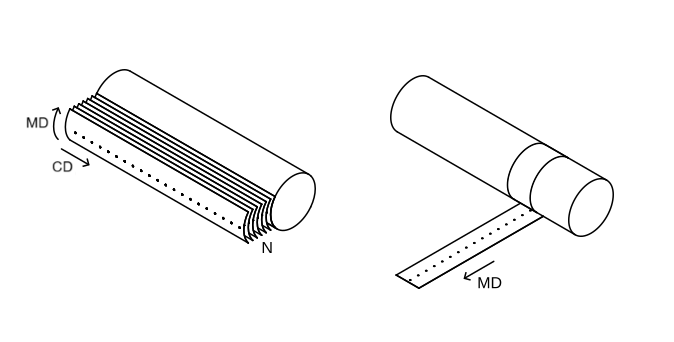
For CD analysis, send us 20 CD strips cut from your parent reel.
For MD analysis, send us a small MD sample roll (70 cm diameter, 20 cm width on a standard 3″ core). If you cannot cut it to that size, we can handle the cutting from any sized rolls.